
AI Tools That Help KDP Authors Build Better Book Listings
On Amazon, readers rarely discover a book by accident. Most books are found through search results, category pages, or recommendation lists. When a reader sees your book, the decision to click often depends on just a few elements: the title, the description preview, and how clearly the book fits their interest.
This is where good listing metadata makes a difference. A clear title helps readers understand the topic immediately. A structured description builds curiosity and trust. Relevant keywords and categories help Amazon show your book to the right audience. Small improvements in these areas can noticeably increase clicks and conversions.
The AI tools on this page are designed to help KDP authors explore those improvements faster. Instead of struggling to come up with ideas, you can generate multiple title options, experiment with description structures, brainstorm keyword angles, and discover category positioning strategies before updating your final listing.
Why Your Amazon Book Listing Matters
When readers browse Amazon, they make decisions quickly. In just a few seconds, they scan the title, read part of the description, and decide whether the book looks relevant to what they want. A well-structured listing helps your book stand out and makes that decision easier for the reader.
Four elements play the biggest role in how readers and Amazon understand your book: the title, the description, the keywords, and the category placement. Each of these signals helps your book appear in the right searches and connect with the right audience.
Book Title
Your title is the first thing readers see in search results. A clear and focused title helps readers instantly understand what the book is about and whether it matches their interest.
Book Description
The description explains the value of your book. A structured description with a strong hook and clear benefits can turn curiosity into actual clicks and purchases.
Keywords
Keywords help Amazon connect your book with reader searches. Choosing relevant search phrases improves discoverability and helps the right audience find your book.
Categories
Categories determine where your book appears in Amazon’s browse pages. The right category placement can improve visibility and even help your book reach bestseller lists within a niche.
Optimizing these elements does not require guesswork. With the right tools, authors can explore different options, compare approaches, and choose the listing structure that best represents their book.
How AI Tools Help Authors Improve Book Listings
Many authors struggle with the same problem when preparing their Amazon listing: coming up with strong wording. Finding the right title phrasing, structuring a clear description, or thinking of useful keyword angles can take hours of trial and error.
AI tools make this process faster by generating multiple ideas in seconds. Instead of working with a single draft, authors can explore different variations, compare approaches, and quickly see how a book could be positioned for different audiences or niches.
The goal is not to copy AI output word for word. The real value comes from using AI as a brainstorming partner. By reviewing several generated options, authors can combine the strongest ideas and refine them into a final version that feels natural and fits the book.
This approach helps authors move from guesswork to structured experimentation. Instead of wondering what might work, you can generate options, evaluate them, and choose the listing direction that best represents your book.
Example: Using AI Tools to Improve a KDP Book Listing
Many authors approach listing optimization step by step. Instead of trying to improve everything at once, they explore different options for each element of the book listing: title, description, keywords, and categories.
AI tools make this process easier by generating multiple ideas quickly. Authors can review several variations, compare different approaches, and then refine the strongest combination before updating the final listing.
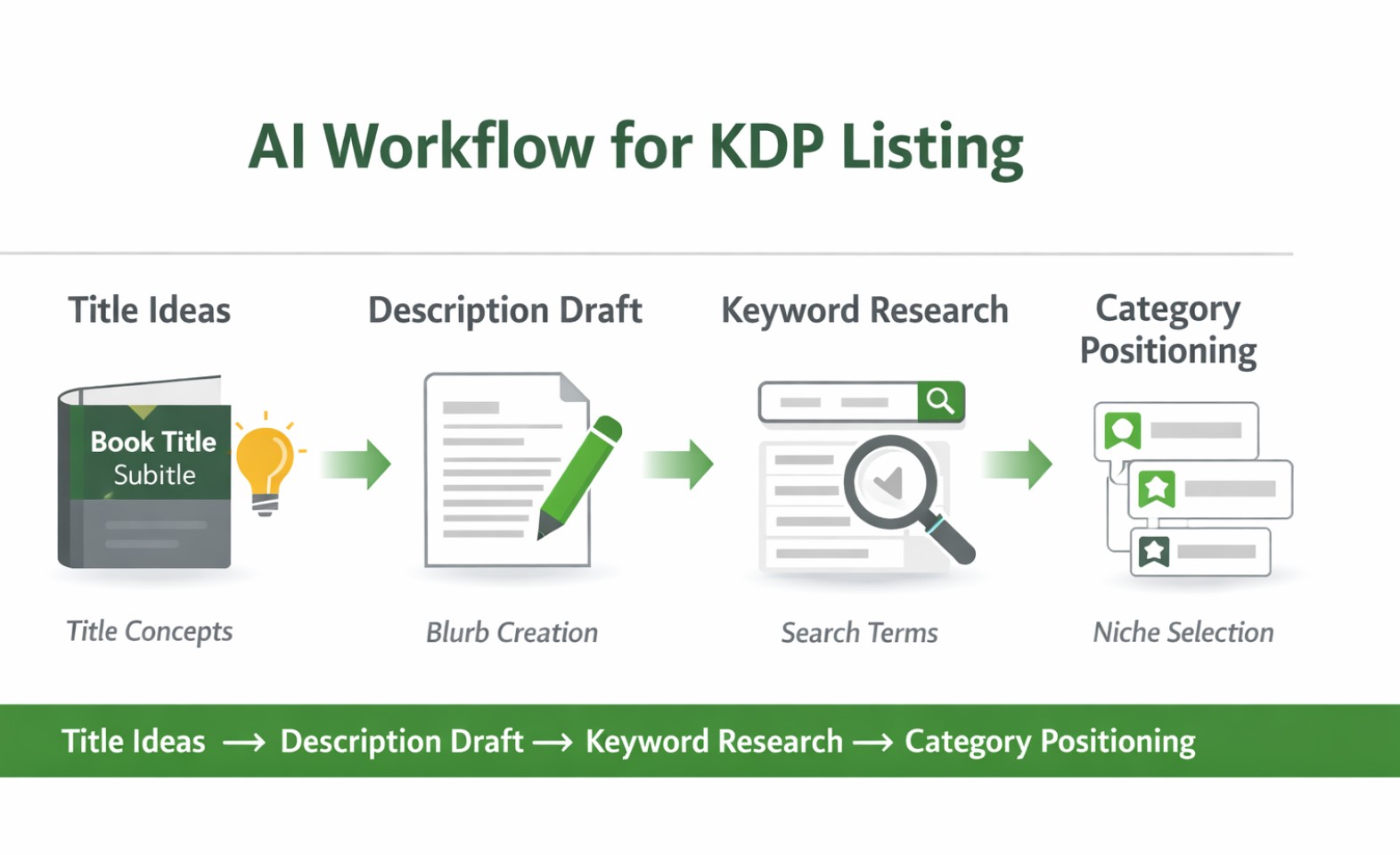
AI Workflow for KDP Listing Optimization
Authors often use AI tools to explore ideas for each part of their Amazon listing before choosing the final version that best represents their book.
Typical workflow: generate title ideas, draft a structured description, explore keyword variations, and review category placement options.
Working through these steps helps authors experiment safely before making changes to their live Amazon listing. Instead of relying on a single idea, you can compare different options and choose the version that communicates your book most clearly.
AI Tools to Optimize Your Amazon Book Listing
Each part of your Amazon book listing requires a slightly different approach. The tools below help authors generate ideas, test different positioning strategies, and refine the elements that influence discoverability and conversion.
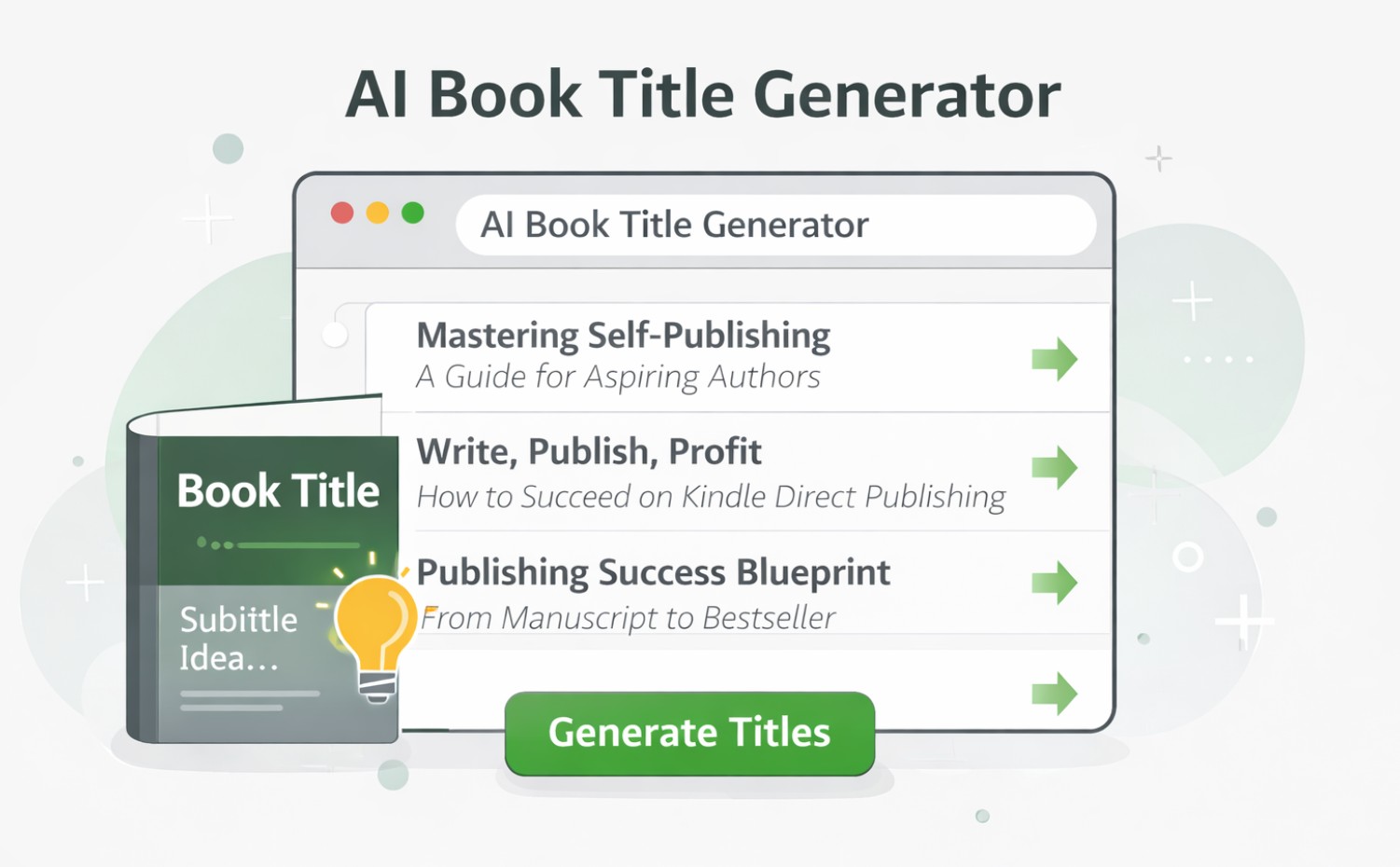
AI Book Title Generator
Explore title and subtitle combinations that clearly communicate the topic, audience, and promise of your book.
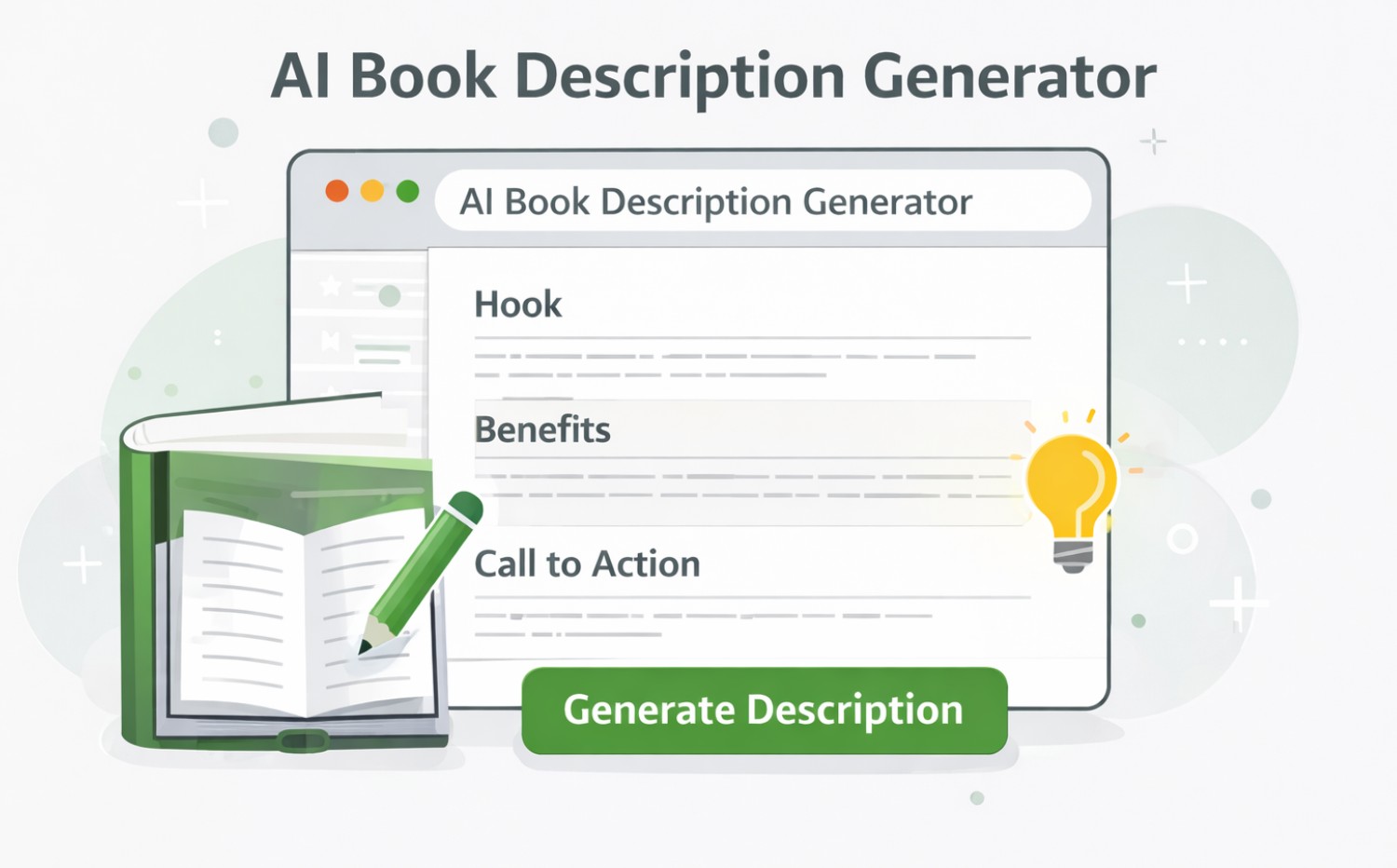
AI Book Description Generator
Generate structured description drafts with clear hooks, benefit sections, and persuasive language for your book listing.
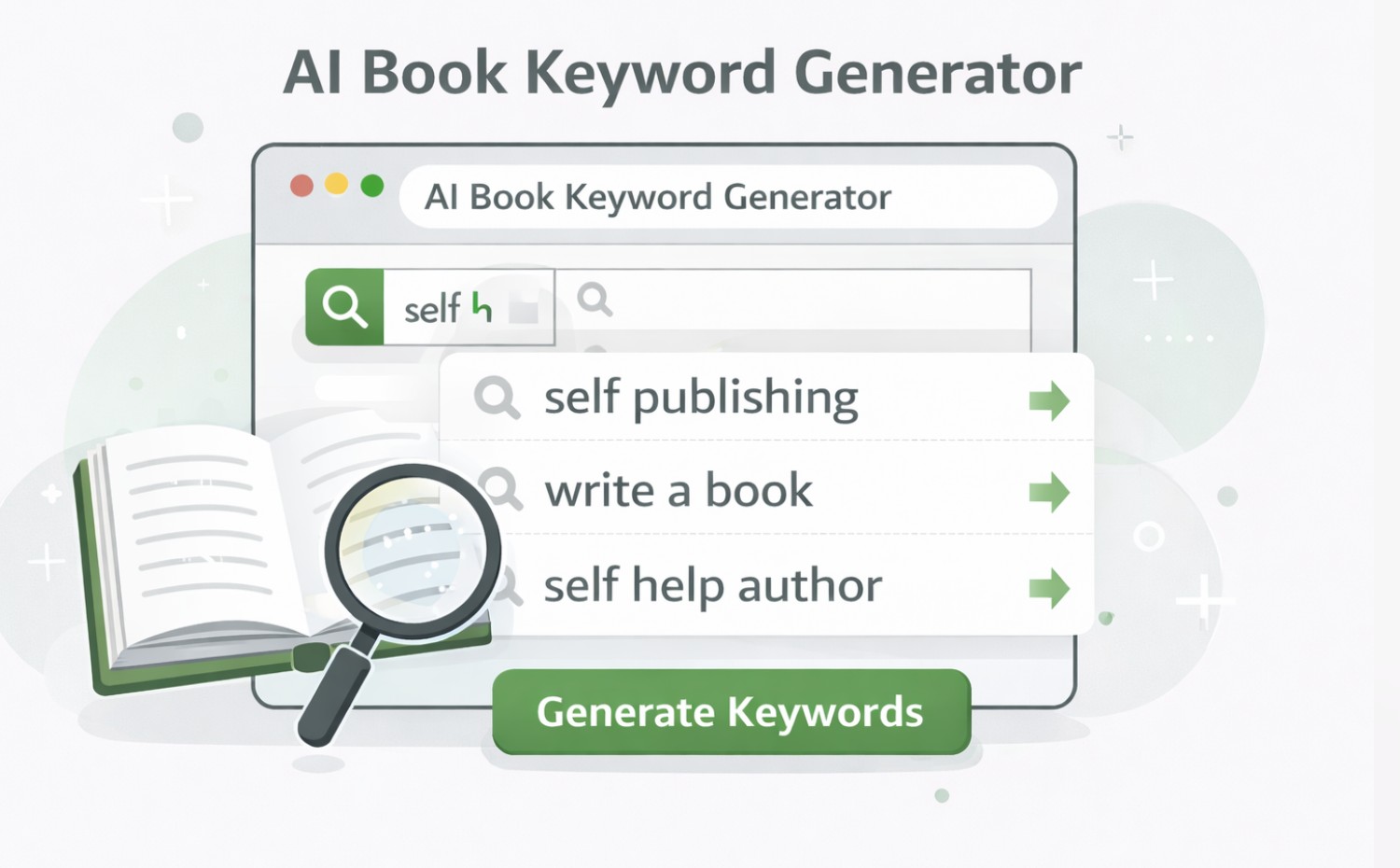
AI Book Keyword Generator
Discover keyword variations and search phrases readers might use when looking for books like yours on Amazon.
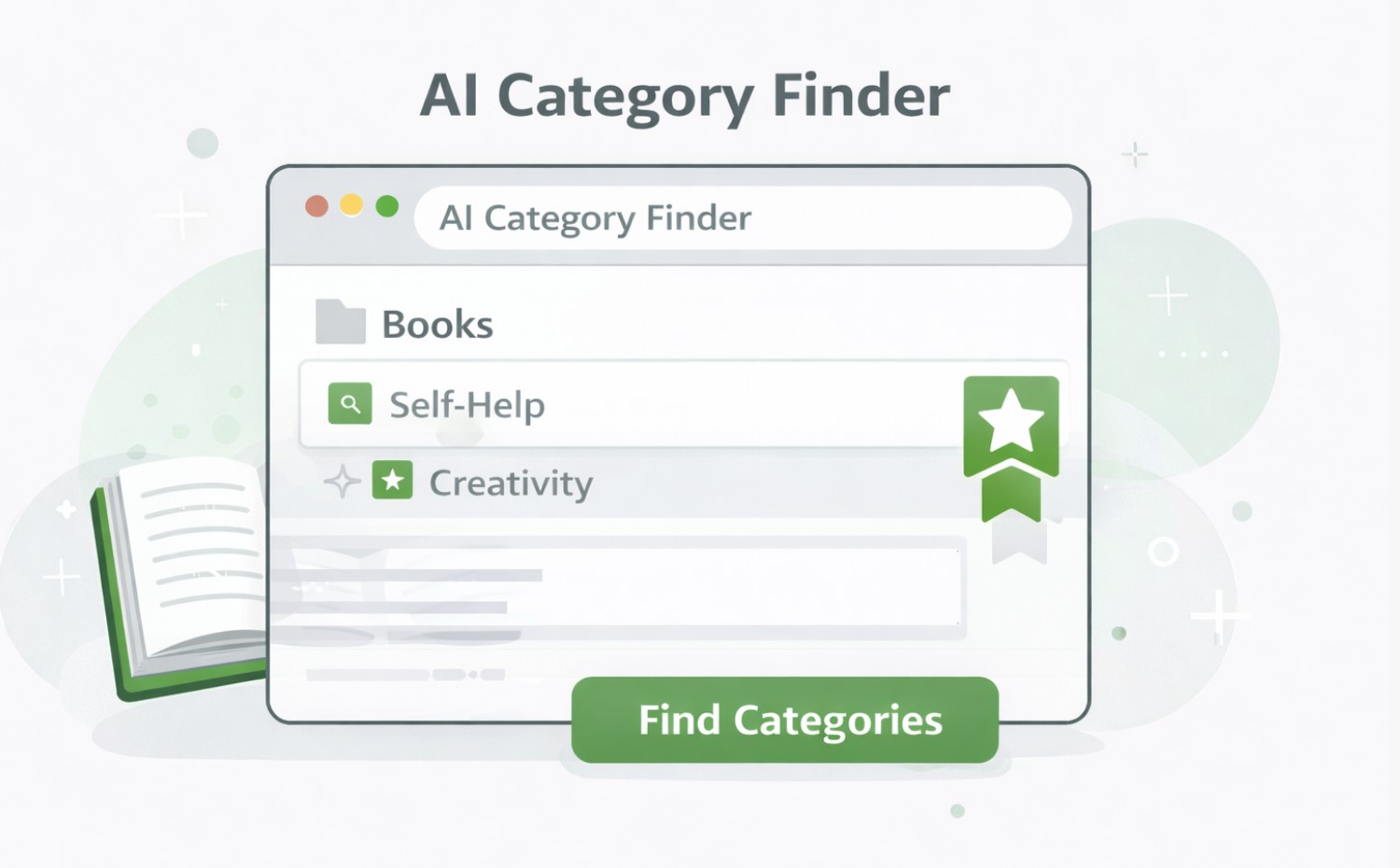
AI Category Finder
Explore relevant Amazon browse categories and discover niche positioning opportunities for your book.
Together, these tools help authors experiment with different listing ideas, compare approaches, and refine the elements that influence how readers discover and evaluate a book on Amazon.
Why AI Tools Help Amazon KDP Authors Work Faster
Preparing an Amazon book listing often requires experimenting with many different ideas before finding the version that works best. Authors try different titles, keyword combinations, and positioning strategies to understand how readers might discover their book.
AI tools make this process significantly faster. Instead of brainstorming everything manually, you can generate multiple variations in seconds and review them side by side. This helps you explore different angles for describing your book and identifying how it might fit within Amazon's search and category system.
Many successful KDP authors treat listing optimization as an iterative process. They test different titles, refine keywords, adjust descriptions, and experiment with category positioning to better match reader intent. AI-assisted tools simply make that exploration easier and more efficient.
Frequently Asked Questions About AI Tools for KDP Authors
Many authors exploring Amazon KDP tools have questions about how AI can help with book listing optimization. Below are some common questions about using AI to improve titles, descriptions, keywords, and category positioning on Amazon.
Can AI help optimize an Amazon KDP book listing?
Yes. AI tools can help authors brainstorm title ideas, generate description drafts, explore keyword variations, and identify potential category positioning. These tools assist the creative process but should always be reviewed and refined by the author before publishing.
What parts of a KDP listing can AI tools help with?
AI tools are commonly used to generate book title ideas, structure description drafts, suggest keyword phrases for Amazon search, and explore potential browse categories. Together, these elements help authors refine how their book appears and is discovered on Amazon.
Do AI-generated titles and keywords guarantee better sales?
No tool can guarantee book sales. However, AI-generated ideas can help authors explore different ways to position their book and test listing elements that may better match reader search intent on Amazon.
How do Amazon keywords affect book discoverability?
Keywords help Amazon understand what your book is about and which readers might be interested in it. Well-chosen keyword phrases can improve how your book appears in search results when readers look for related topics.
Can choosing the right KDP category affect bestseller rankings?
Yes. Books compete within specific Amazon browse categories. In some niche categories, reaching higher positions may require fewer sales than in broader categories. Choosing relevant categories can help a book become more visible to readers browsing that niche.
Are AI tools allowed when publishing books on Amazon KDP?
Yes. Authors may use AI tools to assist with brainstorming, drafting, or research. However, Amazon requires transparency when AI-generated content is used in certain contexts, and authors remain responsible for the final content they publish.
How to Use These AI Tools to Optimize Your Book Listing
Start with the tool that matches your biggest weak spot. If your title does not clearly communicate the topic, begin with the Title Generator. If readers click but do not convert, improve the Description. If your book is hard to discover, explore Keywords and Category placement options.
Generate multiple variations, shortlist the strongest direction, then refine the final version in your own voice. If you update your listing, change one element at a time and track results over several days so you can measure what actually improved performance.
Your Amazon KDP listing is one of the highest-leverage parts of self-publishing. A clearer title, stronger description, better keyword angles, and smarter category placement can improve discoverability and conversion without changing the book itself. Use these AI tools to explore options faster, then validate the best direction with real reader intent and competitor listings before you commit.