
What ARC Book Reviews Mean on Amazon
ARC book reviews are connected to Advance Reader Copies — early versions of a book shared with selected readers before or around launch. The idea is simple: let real readers experience the book early and see how it works in practice.
This approach comes from traditional publishing, where early copies are sent to reviewers, librarians, and media before release. In self-publishing, authors use a similar process, but organize it themselves by working with readers who match the book’s genre or topic.
Readers who receive an advance copy usually go through the book before or shortly after launch. They may share feedback privately, and some may later choose to post a public review once the book is available. Participation is always voluntary and depends on the reader’s experience.
In practice, ARC workflows are not only about reviews. Their main value is early insight. Authors can see how readers interpret the content, where attention drops, and whether the book meets expectations set by the title, cover, and description.
This makes ARC readers especially useful during launch preparation. Instead of publishing and reacting later, authors can observe early reactions, adjust positioning if needed, and move into the launch phase with a clearer understanding of their audience.
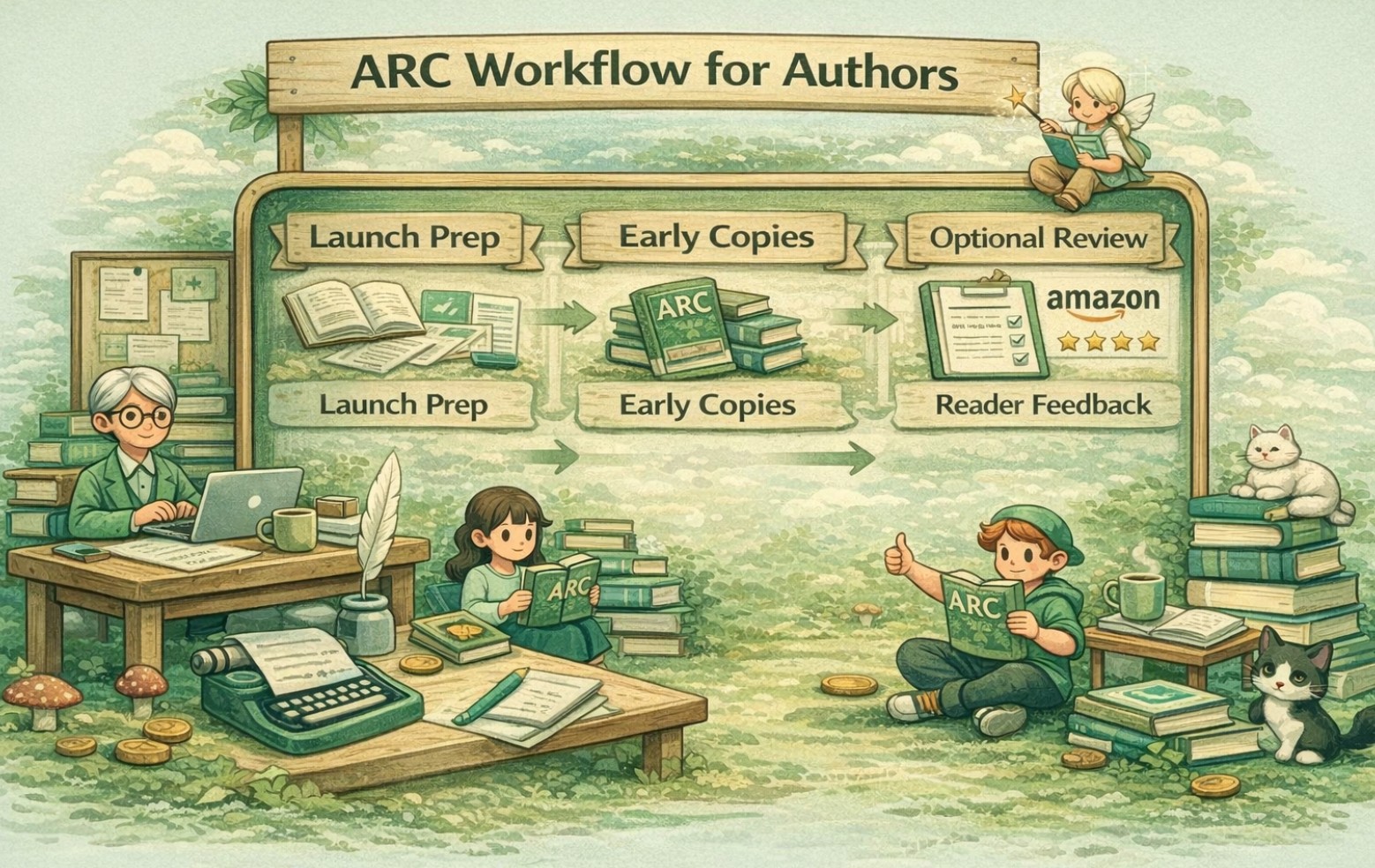
ARC Workflow for Authors
Early copies, reader feedback, and launch preparation help authors refine positioning before publishing at scale.
Why Authors Use ARC Readers Before Launch
Many authors choose to work with ARC readers before publishing a book on Amazon because early reader reactions can reveal important insights that are difficult to notice while writing. When a manuscript has been read only by the author or a small group of editors, it may be hard to see how the book feels from the perspective of a new reader encountering the material for the first time.
ARC readers provide that perspective. By sharing an advance copy with real readers who match the target audience, authors can observe how the book is understood, which parts are engaging, and where the reading experience may still need improvement before the official launch.
- Early reader reactions. ARC readers experience the book without the context the author has during writing. Their reactions often highlight whether the message, story, or ideas are clear to someone encountering the book for the first time.
- Manuscript improvement. Feedback from early readers may reveal unclear sections, pacing issues, formatting problems, or areas where explanations can be strengthened.
- Audience validation. ARC readers help confirm that the book resonates with the intended audience and that the topic, tone, and approach match reader expectations.
- Launch preparation. Early feedback gives authors time to refine the manuscript, improve the listing, and enter the launch phase with greater confidence.
Better Reader Perspective
ARC readers approach the book without prior knowledge of the writing process. Their reactions often reveal how the book feels to a completely new audience.
Stronger Launch Confidence
When authors receive positive early reactions, they gain confidence that the book communicates its value clearly before it reaches a wider audience.
Clearer Audience Fit
Early readers help confirm whether the book resonates with its intended audience and whether its positioning aligns with reader expectations.
Because of these benefits, ARC readers are often considered an important step in professional publishing workflows. Instead of publishing immediately and hoping the audience responds well, authors can refine their work with early reader insight before the book becomes publicly visible on Amazon.
What ARC Readers Actually Do
ARC readers are early readers who receive a copy of the book before or around the launch period. Their role is not limited to leaving reviews. In most publishing workflows, ARC readers primarily help authors understand how real readers experience the book before it becomes widely visible on Amazon.
Because ARC readers approach the book without the background knowledge the author has during writing, their reactions often reveal details that are difficult to notice during the editing process. Their feedback can help identify sections that feel unclear, explanations that need improvement, or moments where the reading experience differs from the expectations created by the book’s title and description.
- Reading the advance copy. ARC readers receive an early version of the manuscript and read it before or around the time the book is released to the public.
- Sharing private feedback. Some readers provide comments directly to the author about clarity, pacing, structure, or overall reading experience.
- Highlighting improvement areas. Early readers may notice confusing sections, formatting issues, or moments where the message could be communicated more clearly.
- Optional public reviews. After the book becomes available on Amazon, some ARC readers may choose to leave a review based on their experience with the book. However, reviews are always voluntary and cannot be guaranteed.
| ARC Reader Activity | How It Helps the Author |
|---|---|
| Reading the manuscript | Allows the author to observe how real readers experience the book before launch. |
| Providing private feedback | Helps identify unclear explanations, pacing issues, or sections that may benefit from revision. |
| Confirming audience fit | Shows whether the book resonates with the intended readers and meets their expectations. |
| Optional public review | Some readers may later leave a review on Amazon, helping future readers understand how the book was received. |
When authors treat ARC readers as partners in the early reading experience rather than simply as a source of reviews, they often gain deeper insight into how their book resonates with readers. This insight helps strengthen both the manuscript and the launch strategy before the book reaches a wider audience.
ARC Readers vs Regular Amazon Reviews
ARC readers and regular Amazon reviews are often mentioned together, but they serve different roles in the publishing process. ARC readers participate before or around launch, helping authors understand how real readers experience the book before it reaches a wider audience. Amazon reviews, on the other hand, appear publicly after readers discover and read the book through normal marketplace visibility.
Understanding the difference between these two stages helps authors design a more effective launch strategy. ARC feedback focuses on improving the book and confirming audience fit, while public Amazon reviews primarily help future readers evaluate whether the book is worth exploring.
| Aspect | ARC Readers | Regular Amazon Reviews |
|---|---|---|
| Timing | Before launch or during early release preparation. | After the book becomes available to the public. |
| Main purpose | Provide early reader feedback and help improve the manuscript or presentation before launch. | Help future readers evaluate the book when browsing Amazon search results or category listings. |
| Reader group | Selected readers who receive an advance copy of the book. | Any reader who purchases or reads the book after it becomes available. |
| Type of feedback | Often includes private comments about pacing, clarity, structure, or overall reading experience. | Public feedback focused on the reader’s experience with the finished book. |
| Review guarantee | No guarantee. ARC readers may choose to leave a review, but it is always voluntary. | Also not guaranteed. Reviews appear when readers decide to share their experience. |
| Impact on launch | Helps authors refine the book and enter launch with stronger positioning and reader confidence. | Helps future readers understand how the book has been received by the audience. |
When authors understand the difference between ARC readers and public Amazon reviews, it becomes easier to build a structured publishing workflow. ARC feedback supports the preparation phase, while reviews become part of the book’s long-term credibility once readers begin discovering it in the marketplace.
Instead of expecting ARC readers to automatically generate reviews, experienced publishers focus on using early reader insight to refine the manuscript, improve the listing, and prepare a clearer launch strategy. When the book resonates with its intended audience, reviews tend to appear more naturally as readers discover and engage with the book over time.
Typical ARC Workflow for Amazon Authors
ARC readers are most helpful when they are part of a structured publishing workflow rather than a last-minute attempt to gather attention before launch. Authors who plan their ARC stage early usually gain more meaningful feedback and have more time to improve the book before it becomes visible to a wider audience.
In practice, ARC workflows follow a sequence of preparation, reader participation, and launch readiness. Each step helps the author move closer to a confident public release while reducing the risk of publishing a book that has not yet been tested by real readers.
| Publishing Stage | What Authors Usually Do | Purpose of the ARC Step |
|---|---|---|
| Prepare the ARC version | The author prepares a near-final version of the manuscript and ensures formatting, structure, and readability are already mostly complete. | Allows early readers to experience the book in a form that closely represents the final release. |
| Invite ARC readers | Authors invite readers who are interested in the topic or genre through newsletters, reader communities, or ARC platforms. | Builds a small early audience that can provide reactions before the book reaches the broader Amazon marketplace. |
| Collect reader feedback | ARC readers share impressions about pacing, clarity, structure, or overall reading experience. | Helps the author identify areas that may benefit from revision or improvement before launch. |
| Refine the book and listing | The author improves the manuscript, adjusts the title or description if needed, and prepares the final listing. | Ensures the book communicates its value clearly when readers first encounter it on Amazon. |
| Launch and reader discovery | The book becomes available publicly and begins reaching readers through Amazon search, categories, and recommendations. | Readers who enjoyed the ARC copy may choose to share their experience publicly, while new readers begin discovering the book. |
When ARC workflows follow this structure, authors gain a valuable opportunity to improve both the book and its presentation before launch. Instead of publishing immediately and hoping the audience responds well, early reader insight helps create a stronger foundation for discoverability, reader trust, and long-term publishing growth.
Where Authors Usually Find ARC Readers
Once authors decide to organize an ARC stage, the next question is where early readers usually come from. In practice, ARC readers are rarely random visitors. Most authors invite readers who are already interested in the topic, genre, or audience the book is written for.
Because of this, ARC readers often come from existing communities, reader groups, or audiences that are naturally connected to the subject of the book. These readers are more likely to provide useful feedback because they represent the type of audience the author hopes to reach after launch.
Newsletter Subscribers
Authors who maintain an email list often invite a small group of subscribers to read early copies of upcoming books. These readers already know the author’s work and may be interested in participating in early feedback.
Reader Communities
Online reader communities, genre groups, and book clubs sometimes include readers who enjoy exploring books before release and sharing their impressions with authors.
Existing Readers
Readers who enjoyed previous books by the same author often become the first candidates for ARC participation because they already understand the style and themes of the work.
Genre-Focused Groups
Some authors connect with genre-specific communities where readers actively look for new titles and enjoy discovering books before they reach wider audiences.
ARC Platforms
Some platforms help connect authors with readers who are interested in advance copies. These readers explore new books and may share feedback after reading.
Social Media Readers
Authors sometimes invite readers from social media audiences who follow their writing or show interest in the topic of the book.
The most effective ARC readers are usually people who genuinely enjoy the subject or genre of the book. When early readers match the intended audience, their reactions often provide more useful insight and help authors refine both the manuscript and the book’s presentation before launch.
Common ARC Mistakes Authors Make
ARC readers can provide valuable insight before a book launch, but the process works best when it is organized carefully. Many authors approach ARC stages for the first time and may unintentionally create problems that reduce the quality of feedback or limit the usefulness of the experience.
Understanding common ARC mistakes helps authors design a better workflow where early readers provide meaningful reactions and the launch process becomes more structured and effective.
- Sharing unfinished manuscripts. Some authors send ARC copies before the manuscript is properly edited or formatted. When the book still contains obvious errors, readers may focus on those problems instead of providing useful feedback about the overall reading experience.
- Inviting the wrong audience. ARC readers should ideally match the target audience of the book. If early readers are not interested in the genre or topic, their reactions may not accurately reflect how the intended audience will experience the book.
- Expecting guaranteed reviews. ARC readers may decide to leave a review after launch, but reviews are always voluntary. Treating ARC readers as a guaranteed review source can create unrealistic expectations and weaken the purpose of early reader feedback.
- Ignoring reader feedback. Some authors collect comments from ARC readers but do not review them carefully or make adjustments before launch. Even small improvements suggested by readers can significantly strengthen the final version of the book.
- Rushing the launch timeline. The ARC stage is most useful when authors allow enough time to gather feedback and make revisions. When the launch date is too close, authors may not have time to apply the insights provided by early readers.
When ARC workflows are organized thoughtfully, early reader feedback becomes one of the most valuable preparation steps before publishing on Amazon. Authors gain insight into how readers interpret the book, which helps strengthen both the manuscript and the launch strategy.
How Virtalibry Helps Authors Organize ARC Workflows
Managing ARC readers manually can quickly become complicated, especially when authors publish multiple books or want to organize early reader feedback more clearly. Invitations, reader responses, feedback notes, and launch preparation tasks often become scattered across email messages, spreadsheets, or different communication channels.
Virtalibry helps simplify this process by providing a structured environment where authors can coordinate ARC readers, collect early reactions, and test elements of their book presentation before launch. Instead of treating ARC readers as a one-time activity, authors can organize the process as part of a broader publishing workflow.
ARC Reader Coordination
Authors can organize early readers around specific book projects and manage participation in a structured way rather than coordinating feedback through scattered messages.
Reader Feedback Collection
Early readers can share impressions about clarity, pacing, structure, or overall reading experience, helping authors identify potential improvements before the book reaches a wider audience.
Positioning Experiments
Authors can compare different titles, subtitles, descriptions, or cover concepts to see how readers interpret the book’s promise before launch.
Launch Preparation Support
By combining reader feedback with publishing tools, authors can refine their book presentation and enter the launch stage with greater confidence.
When ARC readers are organized within a structured workflow, early feedback becomes easier to interpret and apply. Authors gain clearer insight into how readers experience the book and can refine both the manuscript and the book’s positioning before it becomes widely visible on Amazon.
ARC Readers as Part of Long-Term Publishing Growth
ARC readers are most valuable when they are viewed as part of a broader publishing strategy rather than a one-time launch tactic. Early reader feedback helps authors understand how their books are experienced by real audiences before large numbers of readers begin discovering the title on Amazon.
When authors consistently work with early readers, they begin to develop a clearer picture of how their audience interprets topics, structure, tone, and expectations. Over time, this insight can help authors refine their writing, improve positioning, and create books that resonate more strongly with the readers they want to reach.
- Stronger launch preparation. Early reader insight allows authors to refine manuscripts and listings before public release.
- Better audience understanding. Feedback from ARC readers reveals how readers interpret the ideas, themes, and promise of the book.
- Improved positioning. Authors can adjust titles, descriptions, and presentation so the book communicates its value more clearly in Amazon search results.
- Long-term reader relationships. Some ARC readers become regular readers who follow future books and provide valuable insight for later publishing projects.
For many independent authors, ARC readers eventually become part of a long-term publishing workflow. Instead of relying only on launch promotion, authors gradually build a small group of readers who help test ideas, evaluate new books, and provide early reactions before each release.
If you want to organize ARC readers, collect early reader feedback, and experiment with book positioning before launch, you can create a free Virtalibry account and start building a structured reader feedback workflow around your publishing projects.