
How Discoverability Works on Amazon
Amazon is not only the largest bookstore in the world — it is also one of the largest search engines for books. Every day millions of readers type keywords into Amazon search looking for specific topics, genres, and problems they want a book to solve.
KDP discoverability describes how easily a book can be found inside the Amazon marketplace. When a book appears in search results, category listings, and recommendation systems, readers have the opportunity to discover it.
If a book rarely appears in those places, even a well-written book can remain invisible. For self-published authors, discoverability is often the difference between a book that slowly disappears and one that continuously reaches new readers.
Amazon Works Like a Search Engine for Books
When readers search on Amazon, the platform analyzes their keywords and tries to match them with the most relevant books. This process is controlled by the Amazon ranking algorithm, which evaluates signals such as keywords, categories, metadata, and reader engagement.
If the algorithm clearly understands what a book is about and sees positive reader signals, the book has a higher chance of appearing in search results and recommendation systems.
Discoverability Is the First Step in the Reader Journey
Before a reader can click on a book, read its description, or decide to buy it, the book must first become visible somewhere inside the Amazon ecosystem. Discoverability is therefore the first step in the reader journey.
Without visibility there are no clicks, without clicks there are no sales, and without sales the signals that improve ranking and discoverability cannot grow.
Multiple Signals Work Together to Create Visibility
Amazon discoverability does not depend on a single factor. Instead, visibility emerges from the interaction of several systems working together. Keywords help Amazon understand what readers search for, categories define where a book appears, and reader engagement signals help the algorithm decide which books deserve more exposure.
Understanding these signals helps authors improve long-term book visibility. The guides on this page explain how each part of the discoverability system works and how authors can strengthen it step by step.
Core Amazon Discoverability Signals
Book discoverability on Amazon is shaped by several interconnected systems. The platform analyzes how well a book matches reader searches, how clearly it fits into a niche, and how readers interact with the listing after they see it.
Understanding these signals helps authors improve visibility step by step. The topics below explain the core elements that influence how books appear in Amazon search results and recommendation systems.
How Amazon Book Ranking Works
This guide explains how Amazon ranking works and how the algorithm decides which books appear in search results and recommendations across the platform.
How to Rank Books on Amazon
Learn practical strategies that help authors improve visibility and ranking inside the Amazon marketplace by aligning books with reader search intent.
How to Get Your Book Discovered on Amazon
Discover how books gain exposure on Amazon and how authors can strengthen discoverability through positioning, keywords, and reader engagement.
How Amazon KDP Algorithm Works
Explore the core principles behind the Amazon KDP algorithm and how the system evaluates relevance, engagement, and sales signals when ranking books.
Amazon Book Ranking Factors
Understand the main factors that influence Amazon ranking including keywords, reader engagement, niche relevance, and sales activity.
Amazon BSR vs Discoverability
Learn how Best Seller Rank relates to discoverability and what BSR really reveals about book visibility and reader demand.
Keyword Discoverability on Amazon
Keywords are one of the primary mechanisms that connect readers with books on Amazon. When readers type a phrase into the Amazon search bar, the platform analyzes that query and tries to identify books that match the reader’s intent.
For authors, keyword strategy determines whether a book appears when readers search for specific topics, problems, or genres. Well-chosen keywords help Amazon understand what a book is about and which audience may be interested in it.
Understanding how keyword ranking works allows authors to improve discoverability, position books more clearly within a niche, and reach readers who are actively searching for that type of content.
How Amazon Keywords Ranking Works
Learn how Amazon evaluates keyword relevance and determines which books appear for specific search queries.
How to Rank for Amazon Keywords
Explore practical techniques authors use to improve keyword visibility and reach readers searching for their topic.
Amazon KDP Keyword Strategy
Understand how to build a long-term keyword strategy that improves discoverability and strengthens niche positioning.
Categories and Niche Positioning
Amazon categories help structure the marketplace so that readers can browse books by topic, genre, and interest. Instead of relying only on search queries, many readers discover books while navigating category pages that group similar titles together.
For authors, categories are not just labels — they define how a book is positioned inside the Amazon ecosystem. A clearly defined niche helps the algorithm understand who the book is for and increases the chances that it will be shown to readers interested in that topic.
| Factor | What It Means | Why It Matters |
|---|---|---|
| Categories | The sections of the Amazon store where books are grouped by topic or genre. | Readers browsing categories can discover books without using search. |
| Niche Positioning | How clearly a book targets a specific topic or audience within a category. | Strong niche positioning improves relevance and reduces direct competition. |
| Category Ranking | The relative position of a book compared with other books in the same category. | Higher ranks increase exposure and can attract more organic traffic from category pages. |
Categories also interact with other discoverability signals. When a book receives clicks, sales, and reader engagement within a category, Amazon interprets those signals as evidence that the book is relevant to readers browsing that topic.
Over time this feedback loop can strengthen discoverability. As engagement improves, the book may climb category rankings, which increases visibility and exposes it to even more readers who are exploring that niche.
Reader Behavior Signals
Amazon does not evaluate books based only on metadata such as keywords or categories. The platform also observes how readers behave when they see a book in search results, recommendation widgets, or category pages. These behavioral signals help the algorithm determine whether a book is relevant and interesting for the audience that encounters it.
When readers interact positively with a book listing, Amazon interprets those actions as evidence that the book satisfies reader intent. As a result, the system may increase the visibility of that book in search results, recommendations, and category placements.
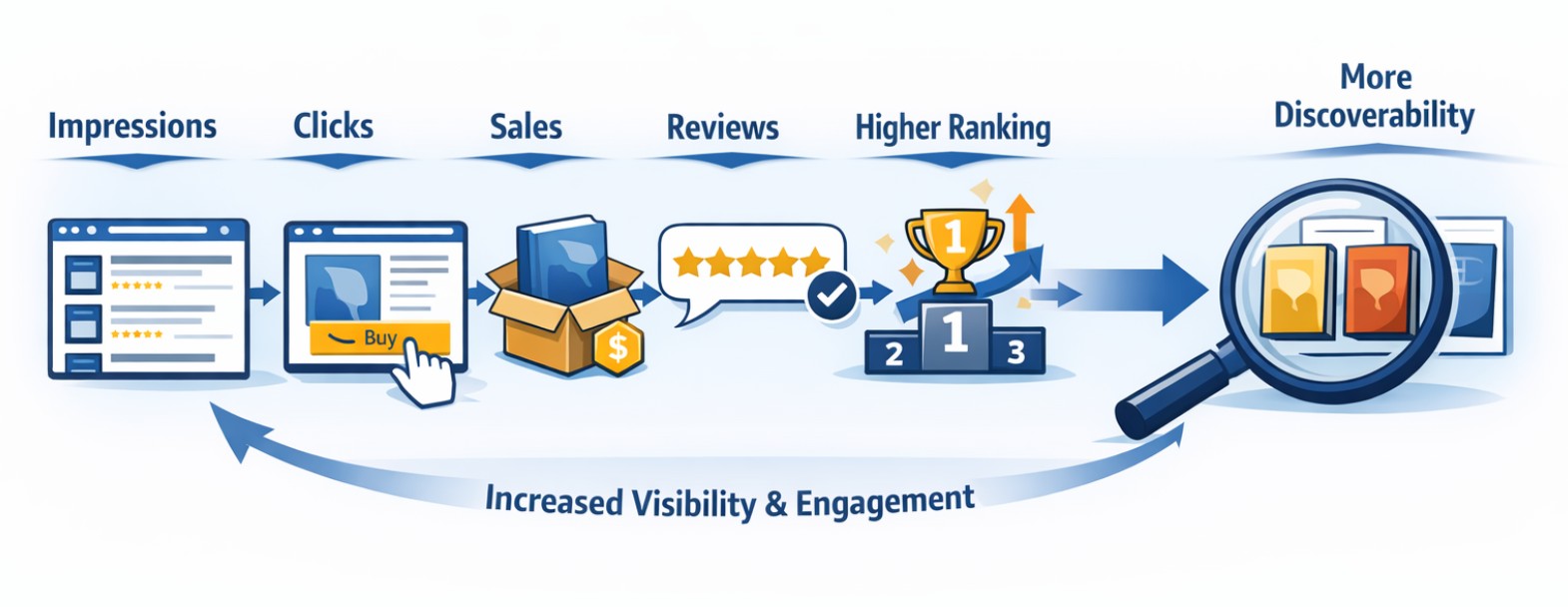
Reader behavior signals diagram
This sequence illustrates how discoverability and reader engagement form a feedback loop. Visibility leads to clicks, clicks lead to sales, and strong engagement signals encourage Amazon to show the book to more readers.
Because of this system, improving book presentation and targeting the right audience can significantly influence discoverability. When a book reaches readers who are genuinely interested in its topic, the resulting engagement strengthens the signals that help the algorithm expand its reach.
- Click-through rate from search results and recommendation widgets
- Conversion rate from page views to purchases
- Sales velocity within a short period of time
- Reader reviews and overall engagement
The Discoverability System
Amazon discoverability is not controlled by a single factor. Instead, the platform evaluates a combination of signals that together determine how visible a book becomes in search results, category pages, and recommendation systems.
Keywords help Amazon understand what readers are searching for, categories define where a book belongs within the marketplace, metadata explains the topic and positioning of the book, and reader engagement signals show how audiences react after encountering the listing.

Amazon discoverability system diagram
The discoverability system works as a chain of signals. Keywords and metadata help Amazon understand what the book is about, categories position it inside a niche, and reader engagement shows whether the audience finds the book relevant.
When these signals reinforce each other, the algorithm becomes more confident about recommending the book. Over time this feedback loop can increase ranking strength and expose the title to a larger number of potential readers across the Amazon ecosystem.
Where Discoverability Fits in Your Publishing Strategy
Discoverability is only one part of a successful self-publishing strategy. While it determines how easily readers can find a book on Amazon, it works best when combined with strong positioning, clear messaging, and consistent marketing activity.
Authors who treat discoverability as part of a broader publishing system are more likely to build long-term visibility. Instead of relying on a single tactic, they gradually strengthen multiple elements that help the Amazon ecosystem understand who the book is for and why readers should engage with it.
- Researching niches and reader demand before publishing
- Choosing keywords that match real Amazon search behavior
- Selecting categories that position the book in a clear niche
- Optimizing titles, subtitles, and descriptions for clarity
- Encouraging early reader engagement through reviews and marketing
When these elements work together, discoverability improves naturally. Amazon receives clearer signals about the book’s topic and audience, which increases the chances that the platform will recommend it to the right readers.
The pages on this site explore each of these discoverability components in more detail. By understanding how the system works, authors can make better decisions about positioning, keyword targeting, and long-term book visibility inside the Amazon marketplace.
Discoverability as a Long-Term Process
Discoverability on Amazon rarely changes overnight. The platform gradually learns how readers respond to a book and adjusts its visibility based on engagement signals such as clicks, purchases, and reviews. Because of this, book visibility typically improves step by step rather than through a single action.
Authors who approach discoverability as an ongoing process often achieve more stable results. By refining keywords, adjusting positioning, improving book listings, and encouraging reader engagement, it becomes easier for the Amazon ecosystem to understand where the book fits within the marketplace.
Over time these improvements help strengthen the signals that influence Amazon ranking. As the algorithm receives clearer evidence that readers are interested in the book, it may begin to show the title more frequently in search results, category listings, and recommendation widgets.
Understanding how discoverability works allows authors to make informed decisions about positioning, keyword strategy, and long-term marketing. Instead of relying on short-term tactics, they can gradually build visibility that helps new readers discover their books across Amazon.