
Free Tools for KDP Authors
Publishing a book on Amazon KDP doesn’t end when the manuscript is finished. What happens after a reader finishes the book often matters just as much. Authors who give readers a clear next step—such as a bonus page, a download, or another activity—usually create stronger engagement and long-term readers.
This is where simple publishing tools become useful. Instead of relying only on Amazon’s product page, authors can connect their books with additional content, reader bonuses, or entirely new types of books. Small tools like QR codes or printable puzzle generators make it easier to build that ecosystem around your catalog.
For example, a QR code placed inside a book can send readers to a landing page with bonus material, updates, or a newsletter signup. Puzzle and printable generators make it possible to create activity books or expand a catalog with low-content projects that readers enjoy.
The tools on this page focus on practical upgrades authors can use immediately: connecting printed books with online content through QR codes and creating puzzle-based books that expand a KDP catalog.
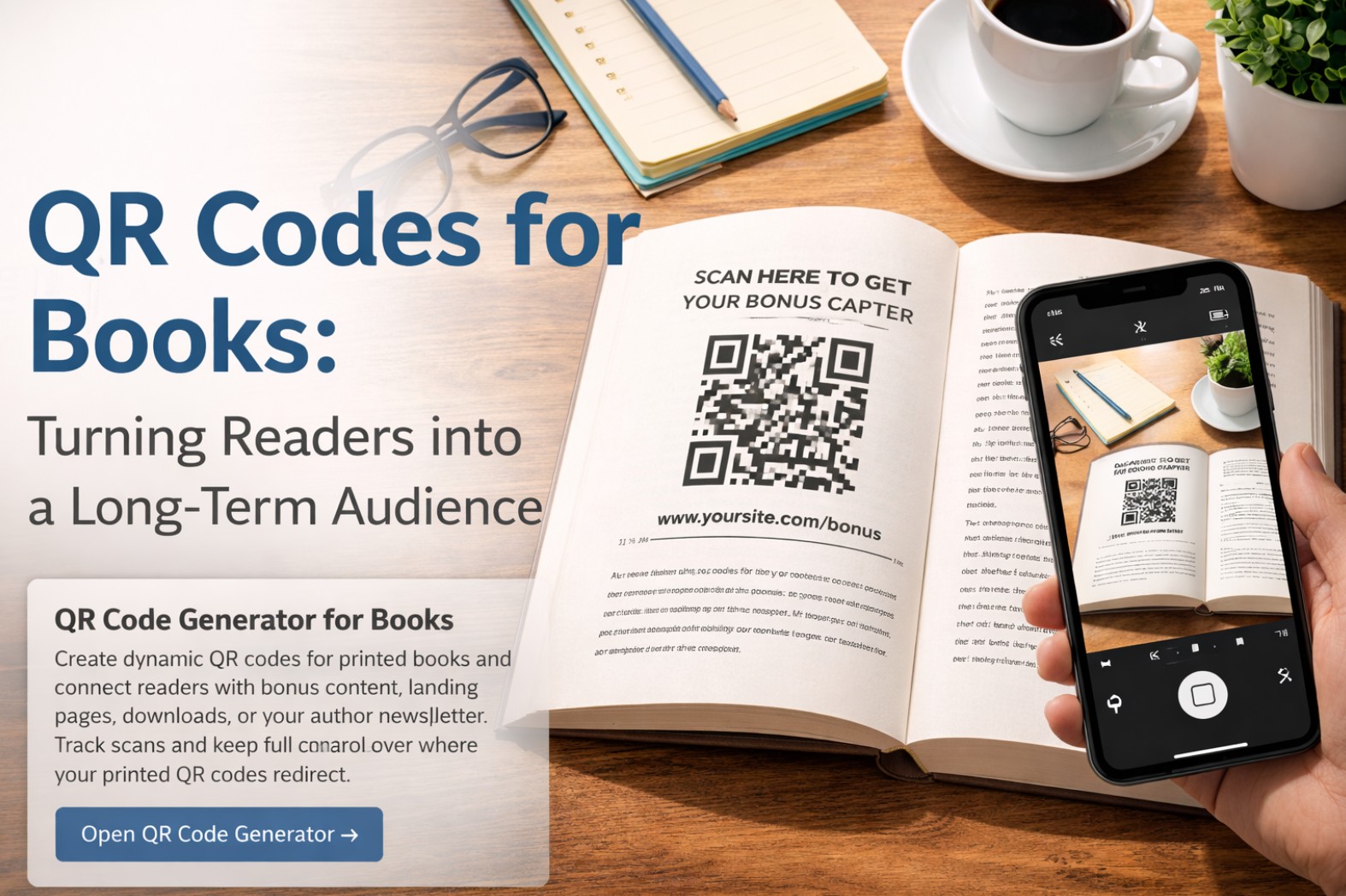
QR Codes for Books: Turning Readers into a Long-Term Audience
A printed book is powerful, but it is also static. Once the book is published, the pages cannot change. A QR code allows you to connect that static book with dynamic online content. By placing a small QR code inside your book, you can guide readers to a landing page, bonus material, updates, or your author newsletter.
Many authors place QR codes at the end of a book with a simple message such as “Scan to download your bonus chapter” or “Get the companion workbook.” Because most readers already have a phone in their hands, scanning a code is much easier than typing a long web address.
The most important part is control. A good QR code setup allows the printed code to remain the same while you control where it redirects. That means you can update the landing page, track scans, or change the destination over time without reprinting the book.
Using a QR code generator designed for authors makes this process simple. You create one stable code for your book, connect it to a landing page or reader bonus, and keep full control over where your readers go after scanning.
Create dynamic QR codes for printed books and connect readers with bonus content, landing pages, downloads, or your author newsletter. Track scans and keep full control over where your printed QR codes redirect.
Puzzle Generators: Creating New Books for Your KDP Catalog
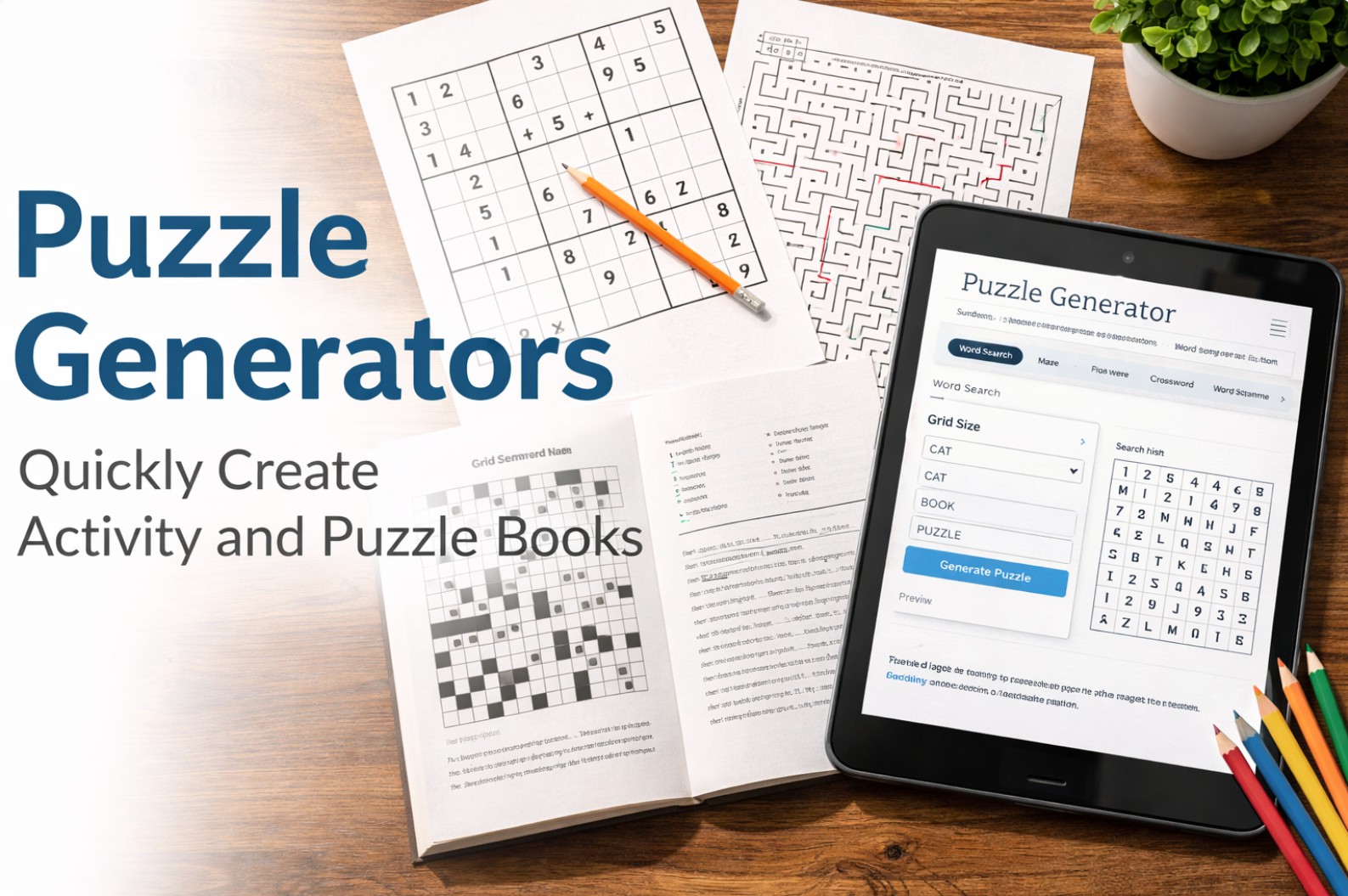
Puzzle books are one of the most stable and popular formats on Amazon KDP. Word searches, sudoku, mazes, and other printable activities are easy for readers to understand and work especially well in printed form.
For authors, puzzle generators make it possible to create these books without building every puzzle manually. Instead of spending hours designing grids or layouts, you can generate puzzles automatically and focus on themes, niches, and book design.
Many authors use puzzle generators to create activity books, educational workbooks, themed puzzle collections, or entire puzzle series. These books can become standalone products or a completely new branch of a KDP catalog.
A dedicated puzzle generator allows you to quickly produce printable puzzles, export them for publishing, and build full puzzle books ready for Amazon KDP.
Puzzle Generator for KDP - Sudoku, Word Search, Crosswords etc.
Generate printable puzzles like word searches, sudoku, mazes, crosswords, and more. Export puzzles ready for publishing and quickly build puzzle books for Amazon KDP.
Start with One Simple Upgrade
You don’t need a complicated system to improve your publishing workflow. Often a single small upgrade can make a noticeable difference. A QR code can connect readers with your website or bonus content, while puzzle tools can help you experiment with entirely new book formats.
The key idea is to keep things simple. Add one tool, see how readers respond, and improve from there. Over time these small improvements can turn a single book into a much stronger publishing ecosystem.
Explore the tools above and choose the one that fits your next step as an author.