

How to Build an ARC Team
Coordinate advance-copy delivery, realistic timing and useful support while keeping each reader's opinion independent. Build a process you can maintain, not a review quota.
Use a team brief, a private status table, an example schedule and three concise messages to manage the campaign from acceptance to closure.
Policy references checked on 17 October 2026. Availability and eligibility still depend on the actual edition, destination and reader account.
Build an ARC team as a reading process, not a review quota
An ARC team is a manageable group of people who choose to receive an advance copy and related communication for a book. The author coordinates delivery, timing and support. Each reader remains responsible for their own opinion and any decision to share it publicly.
Write a one-page brief before recruiting: the book, intended readers, file formats, planned release date, proposed reading period, communication scope and support contact. Use the ARC reader guide when deciding where and how to recruit.
The tracker and messages below are an author-managed voluntary workflow, not a claim that Virtalibry provides these ARC-team controls. A reward-based assignment's completion rules do not become retailer-approved simply because it is called an ARC; check the actual service workflow and the destination's rules separately.
Example team brief
- Book: a near-final closed-door mystery, with accurate length and content notes.
- Readers: people who enjoy the genre and choose the proposed period.
- Copy: a tested EPUB, with another format where practical.
- Communication: delivery information, a limited access check and a release update.
- Reader choice: participation and public reviewing are voluntary.
- Owner: one named person responsible for file problems and schedule changes.
This is a working example, not a contract promising a review. Do not include a required rating, a public-review deadline penalty or author approval of the opinion.
1. Choose a size you can support
There is no universal correct team size. Start with the number of readers you can onboard, help and communicate with accurately. A small group can reveal file or invitation problems before you repeat them at a larger scale.
Plan work instead of inventing a review yield
Estimate the tasks: replying to requests, confirming format, supporting access, recording actual responses and handling schedule changes. If the required time exceeds what you have, simplify the process or reduce the group. Do not promise yourself a fixed percentage of public reviews from copies distributed.
Keep manuscript editing separate. ARC readers should not become unpaid emergency proofreaders for a book you describe as finished. If substantial changes remain, move that work into a clearly identified beta-reading or editorial stage.
Fictional support budget: you have 120 minutes this week. Allow 30 minutes to test the copy and delivery instructions, then five minutes to onboard each of 12 readers: 30 + (12 × 5) = 90 minutes, leaving 30 for access problems. These are planning assumptions, not measured service times. If actual support exceeds that reserve, pause recruitment instead of shortening the reading period or pressuring readers.
2. Track the process without scoring reader opinions
A simple private table is enough. Track facts needed to coordinate the copy, not a surveillance record of every reader's online activity. Limit access to personal data and keep the retention period tied to a legitimate purpose.
| Status | Meaning | Do not infer |
|---|---|---|
| Invited | An appropriate invitation was sent | The person accepted or wants future marketing |
| Accepted | The reader chose this copy and communication scope | A review or favorable rating is owed |
| Copy sent | The agreed file or access link was delivered | The reader opened or finished the book |
| Access issue | A reported technical problem needs help | The reader is avoiding participation |
| Response received | A reader supplied feedback or an update | The response is permission to quote it publicly |
| Closed or withdrawn | The reader opted out or the agreed contact period ended | The person may be re-enrolled automatically |
Keep the fields minimal
- Reader contact and preferred format.
- Title-specific acceptance and communication preferences.
- Copy version, date sent and reported access issue.
- Relevant response supplied voluntarily.
- Withdrawal or closure state so follow-ups stop.
Do not request Amazon credentials, spending information or proof of a particular rating. A public URL can be recorded if the reader chooses to share it, but it should not be a condition for keeping the copy.
Fictional snapshot: 12 readers accepted, copies were sent to 10, two still need a usable format, and three of the 10 sent readers supplied private notes. The three responses are a subset, not three additional participants. None of these counts establishes how many public reviews were published.
3. Give the reading period enough room
Work backward from a dependable publication plan, accounting for book length, complexity and the availability readers report. The schedule below is an example for a near-final book, not a requirement of Amazon or another platform.
| Period | Author task | Reader-facing purpose |
|---|---|---|
| Before recruitment | Finish the reading file and test delivery | A clear offer of a usable copy |
| Weeks 1-2 | Invite, confirm participation and send copies | Choose the book and resolve access problems |
| Middle of the period | Offer limited help if agreed | Clarify files or a material schedule change |
| Release period | Verify public links and communicate the actual status | Provide accurate information without demanding a review |
| After the agreed period | Thank participants and close the campaign | Stop unwanted follow-up and record preferences |
For a longer book, expand the reading period or recruit earlier. If the final file is late, explain the change and let people decline. Do not compress their reading time merely to preserve a launch-day review target.
4. Make delivery easy and version changes visible
Test before the first send
- Open the actual file in the intended reading app or device.
- Check navigation, images, chapter breaks and completeness.
- Test the access link without relying on your administrator login.
- Verify that individual contact details are not exposed to the group.
- Provide concise help instructions and a monitored reply route.
A delivery provider can reduce support work, but it does not remove the need to test. If you use a review-copy platform such as NetGalley, check the current title setup, audience and terms rather than assuming every platform offers the same service.
Replace files only for a clear reason
Record the new version and summarize material changes. For a minor typo, a replacement may be unnecessary; for missing chapters, it is essential. Let readers know whether their existing notes refer to text that has changed. Do not silently substitute a different book under the same delivery link.
Keep a minimal replacement log: old version, new version, reason, recipients notified and any reported access problem. Test the replacement as a reader, not while signed in as the file owner. Never publish personal access links in a shared status sheet.
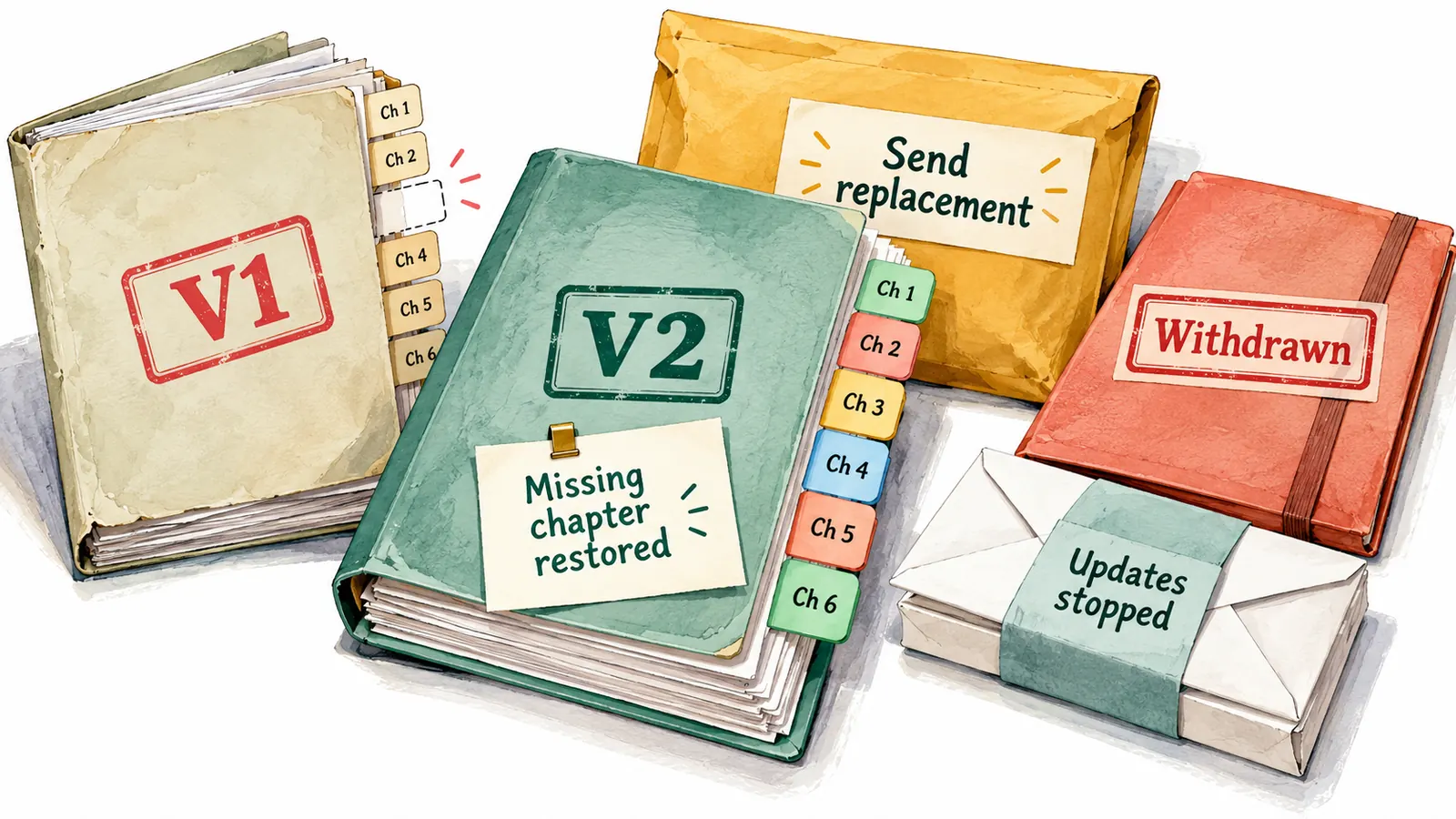
Worked incident: reader R07 reports chapter three missing from V1. Confirm the defect, restore the chapter in V2, test the file and offer the corrected copy to affected readers who still want updates. Reader R08 has withdrawn: keep that contact suppressed and cancel queued title-specific messages rather than including it in the replacement send. The correction does not create a new obligation to read or review.
5. Use a short communication sequence
Keep campaign messages relevant to the permission given. ARC participation is not automatic enrollment in an unrelated newsletter. Use the email-list guide if you also offer a separate author subscription.
Message 1: acceptance and delivery
Subject: Your advance copy of [title]
Thanks for choosing to read [title]. Your [format] copy is available here: [access link]. This is version [version], with publication currently planned for [date].
If the file does not open, reply and tell me which device or app you are using. Public reviewing is entirely your choice. To stop ARC updates for this title, use [working opt-out route].
Message 2: an agreed access check
Subject: Any access problems with [title]?
I am checking that the advance copy is usable. If the link or formatting is causing a problem, you can reply for help. There is no need to send a progress report, and it is fine if the book or timing no longer fits. To stop updates for this title, use [working opt-out route].
Message 3: a factual release update
Subject: [Title] release update
[Title] is now [accurate publication status]. The intended edition is here: [verified link]. If you independently choose to share your reading experience, follow the destination's rules and identify the advance-copy source as appropriate. No response is required. To stop updates for this title, use [working opt-out route]. Thank you for taking a look.
Replace the bracketed details with verified information and use the opt-out method your actual workflow supports. Do not send an availability claim until you have checked the public destination.
Test withdrawal after the delivery message: queued access checks and release updates for that title must stop. If publication moves, pause messages containing the old date before preparing the correction. Future ARC invitations and a general newsletter remain separate choices.
6. Keep review independence outside team administration
Team membership must not require praise, a rating floor or a purchase. Apply KDP's review rules to any Amazon-facing request. Private feedback can be invited, but should not be a mandatory filter preventing a critical public opinion.
Discuss clear source disclosure without prescribing the review's conclusions. The FTC endorsement guidance is relevant to US-facing endorsements; other rules and destination policies may also apply. A disclosure does not make every relationship or incentive acceptable everywhere.
7. Decide in advance how exceptions will work
| Situation | Action | Avoid |
|---|---|---|
| File cannot be opened | Offer a usable format or access help | Treating access failure as reader misconduct |
| Publication moves | Send one clear update and offer withdrawal | Repeated reminders using the old date |
| Reader stops reading | Accept the decision and optional feedback | Demanding completion or a positive opinion |
| Platform blocks reviewing | Respect the restriction and close that request | Alternative accounts or manufactured purchases |
| Reader withdraws | Stop the relevant follow-up and preserve appropriate suppression state | Auto-enrolling them in the next release |
Do not monitor public profiles to challenge a person's private explanation. Manage the campaign through the choices and information they provide.
8. Close the campaign and improve the next one
Thank the people who participated and end title-specific contact at the agreed point. Keep future ARC invitations separate: ask whether they want them rather than carrying everyone forward automatically.
Review access problems, reader fit, timing and support effort. Separate copies sent, actual responses and public reviews. None proves the others. Avoid a leaderboard of star ratings or a penalty for readers who chose not to review.
For publication timing and the distinction between private notes and public reviews, continue to pre-launch review planning. Add your delivery and schedule checks to the launch checklist. A successful team process is clear, usable and respectful even when public response is smaller than hoped.
Use a focused feedback brief when asking a private question, and keep public-review requirements outside the team's administrative completion checks.
Explore the book marketing guides to connect this task with launch planning, audience building and promotion.
For fiction reader fit, compare the descriptions in the Mystery, Thriller & Suspense library and the Science Fiction & Fantasy library. These are current book listings, not a directory of readers available for recruitment or a promise of downloadable copies.
Frequently asked questions
What should an ARC team brief contain?
Name the book, intended readers, file formats, proposed reading period, publication plan, communication scope and support contact. Explain the reader's choices. Do not include required praise, rating floors or penalties for not posting publicly.
How large should my first ARC team be?
Choose a size you can onboard and support within your available time. A small first round can reveal delivery or timing problems. Team size is an operational choice, not a reliable forecast of launch-day reviews.
Which reader statuses should I track?
Use factual statuses such as invited, accepted, copy sent, access issue, response received and closed or withdrawn. Avoid inferring reading completion from downloads or treating a response as permission to quote it.
How many reminders should I send?
Use the limited communication the reader agreed to receive. Delivery information, an optional access check and a factual release update can be enough. Withdrawal or closure should cancel queued title-specific messages too; do not escalate reminders to obtain a review.
What should I do if I replace the advance file?
Identify the new version and explain any material change. Test the replacement and let readers understand whether their existing notes refer to changed content. Avoid silently substituting a different or substantially revised file.
Should readers automatically join the next ARC campaign?
No. Ask about future invitations separately and respect their preferences. Close title-specific contact at the agreed point and do not convert participation into an unrelated newsletter subscription.