
Why Amazon Review Rules Exist
Amazon review rules exist because reviews influence how readers judge a book before buying it. A strong review section can build trust, improve conversion, and shape the way a title is perceived in a crowded marketplace. When reviews stop feeling authentic, that trust becomes weaker for readers, authors, and the platform itself.
From Amazon’s point of view, the goal is not simply to collect more reviews, but to protect the credibility of the review system. That is why certain patterns draw more attention than others. If feedback looks overly coordinated, pressured, or disconnected from normal reader behavior, it may create policy concerns even when the author intended something practical rather than risky.
This matters especially for authors because reviews are tied to visibility, trust, and long-term publishing results. A review strategy that ignores policy can create instability later. A strategy built around authentic readers and transparent workflows usually performs better over time and creates fewer problems during launch and after publication.
In simple terms, Amazon review rules are there to separate natural reader response from behavior that looks artificial. Authors who understand that difference early tend to make better decisions, choose safer outreach methods, and build review growth on a more stable foundation.
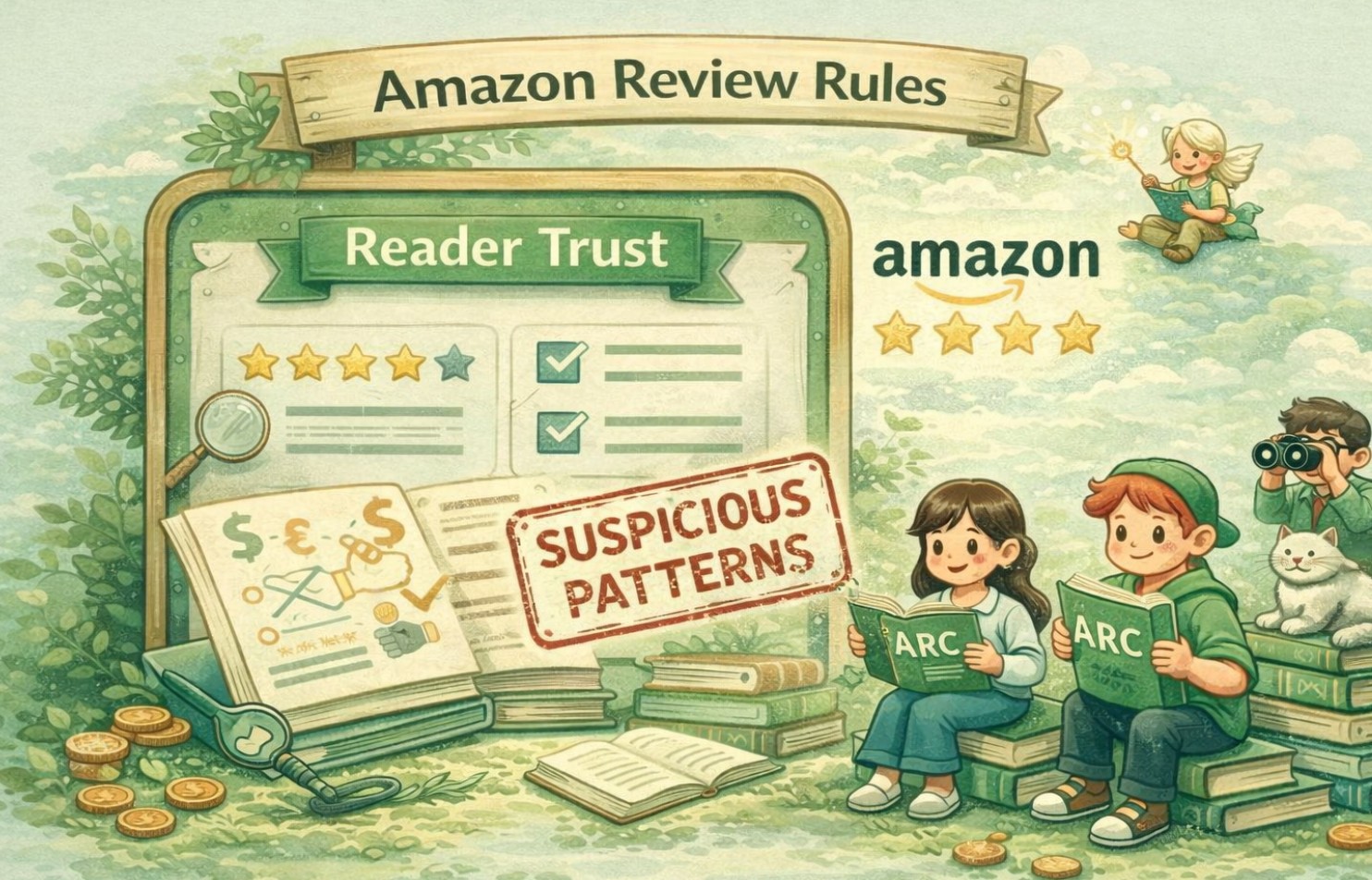
Review Rules and Reader Trust
Amazon review policy is built to protect authenticity, reduce suspicious patterns, and preserve reader trust across the marketplace.
Review Patterns That Can Create Risk
Amazon does not evaluate reviews one by one in isolation. It also looks at patterns — how reviews appear, how they are timed, and whether they resemble natural reader behavior. Some patterns are more likely to raise questions, even when the intention behind them seems reasonable.
When multiple reviews appear in a structured or synchronized way, it may look organized rather than natural reader behavior.
When readers feel expected to leave a certain type of response, the feedback may appear influenced rather than independent.
A sudden cluster of reviews within a short time window can sometimes look different from normal reading and reviewing patterns.
When reviews come from readers who are not aligned with the book’s genre, engagement and feedback quality may be weaker.
Similar behavior repeated across multiple books or launches can appear structured instead of organic reader interaction.
When feedback appears connected to external incentives or structured processes, it may be interpreted as less independent.
The key idea is not that every situation is a problem, but that patterns matter. Review systems are designed to detect behavior that looks natural versus behavior that appears organized.
The Difference Between Feedback and Influence
Authors are allowed to invite readers to share their experience. The important difference lies in how that interaction happens. When feedback remains independent, it reflects real reader response. When expectations or structure are added, the same process may begin to look influenced rather than natural.
| Authentic Feedback | Influenced Behavior |
|---|---|
| Reader decides independently whether to leave a review | Reader feels expected to leave feedback after receiving the book |
| No outcome is suggested or implied | There is an expectation about the type of response |
| Feedback appears naturally over time | Feedback appears in structured or compressed timing |
| Reader and book are naturally aligned | Reader selection does not match the intended audience |
| Process remains transparent and voluntary | Process includes elements that may look organized or directed |
The difference is not always about a single action, but about how the overall process looks. When feedback reflects genuine reader choice, it aligns more closely with how review systems are designed to work.
What Authors Often Get Wrong
Many review-related problems do not come from breaking rules directly, but from how the process is approached. Small decisions made early can affect how review activity looks later.
Expecting a large number of reviews in a short time often leads to patterns that do not reflect normal reader behavior.
When readers are not aligned with the book’s genre, engagement and feedback may not represent the intended audience.
Seeing reviews as something to “complete” often leads to short-term actions instead of a stable long-term approach.
Weak covers, unclear descriptions, or mismatched expectations reduce the effectiveness of any review effort.
Using only one platform or method limits visibility and makes results less consistent over time.
Without a structured process, review activity becomes fragmented and harder to manage or improve.
In many cases, the issue is not the platform itself, but how it is used. A more structured approach usually leads to better and more stable results.
What Works Better Over Time
Instead of focusing only on rules or restrictions, it helps to look at what actually works in practice. Review growth tends to be more stable when it is based on real readers, clear positioning, and a structured approach.
- Working with readers who match the book’s genre and expectations
- Using ARC workflows that remain transparent and voluntary
- Allowing feedback to appear naturally instead of forcing timing
- Combining multiple channels instead of relying on a single source
- Focusing on consistency rather than short-term spikes
- Improving positioning before increasing exposure
This kind of approach may look slower at first, but it usually leads to stronger engagement, more relevant feedback, and more устойчивый результат over time.
Comparing Safer and Riskier Review Approaches
Different approaches to reviews can look very similar on the surface, but the way they are structured makes a difference. This comparison helps highlight how certain patterns are interpreted more naturally, while others may raise questions over time.
| Approach | Safer Pattern | Higher Risk Pattern |
|---|---|---|
| Reader Outreach | Inviting readers to share honest feedback | Creating expectations around the outcome of feedback |
| ARC Workflow | Transparent early access with voluntary participation | Structured or pressured review expectations |
| Timing | Reviews appear gradually over time | Large number of reviews in a compressed time window |
| Audience Fit | Readers match the book’s genre and expectations | Readers are not aligned with the intended audience |
| Process | Organic and repeatable workflow | One-time actions or fragmented efforts |
| Long-Term Growth | Consistent reader engagement over time | Short-term spikes without stability |
The difference often comes down to structure and intent. Approaches that reflect natural reader behavior tend to remain more stable, while structured or forced patterns can create inconsistency over time.
Why Understanding Rules Is Not Enough
Knowing how review rules work is important, but it is only part of the process. Authors who focus only on avoiding risk often end up with a very limited approach that does not produce consistent results.
In practice, review growth depends not only on what is allowed, but on how the entire workflow is structured. Reader selection, timing, positioning, and consistency all play a role in how feedback appears and how it is perceived.
- Building a clear process instead of relying on isolated actions
- Working with the right readers rather than increasing volume
- Keeping review activity consistent across launches
- Aligning book positioning with reader expectations
- Focusing on long-term visibility instead of short-term spikes
This shift from isolated tactics to structured workflows helps make review growth more stable and easier to manage. Instead of reacting to problems after they appear, authors can build a system that supports consistent results over time.
Review rules remain an important part of that system, but they work best when they are combined with clear strategy, relevant audience targeting, and a repeatable process.