

How to Get Your Book Discovered on Amazon
Make the book reachable, relevant and understandable to its intended reader.
Follow a bounded plan for availability, reader language, category fit and a permitted introduction route, with honest measurement.
Start with a reader problem, not a promise to rank
To get a book discovered, make it clear who the book serves, verify that readers can reach the intended edition and choose a relevant route for introducing it. A book can be live without appearing prominently for a broad search. The first useful question is not how to impress an algorithm, but which reader would recognize this offer as appropriate.
Write a one-sentence reader promise with subject or genre, starting level and a meaningful constraint. For fiction, name the reading experience rather than turning the plot into a list of trending tropes. For nonfiction, identify the actual task and scope. The promise should agree with the manuscript, cover and description.
Original positioning example
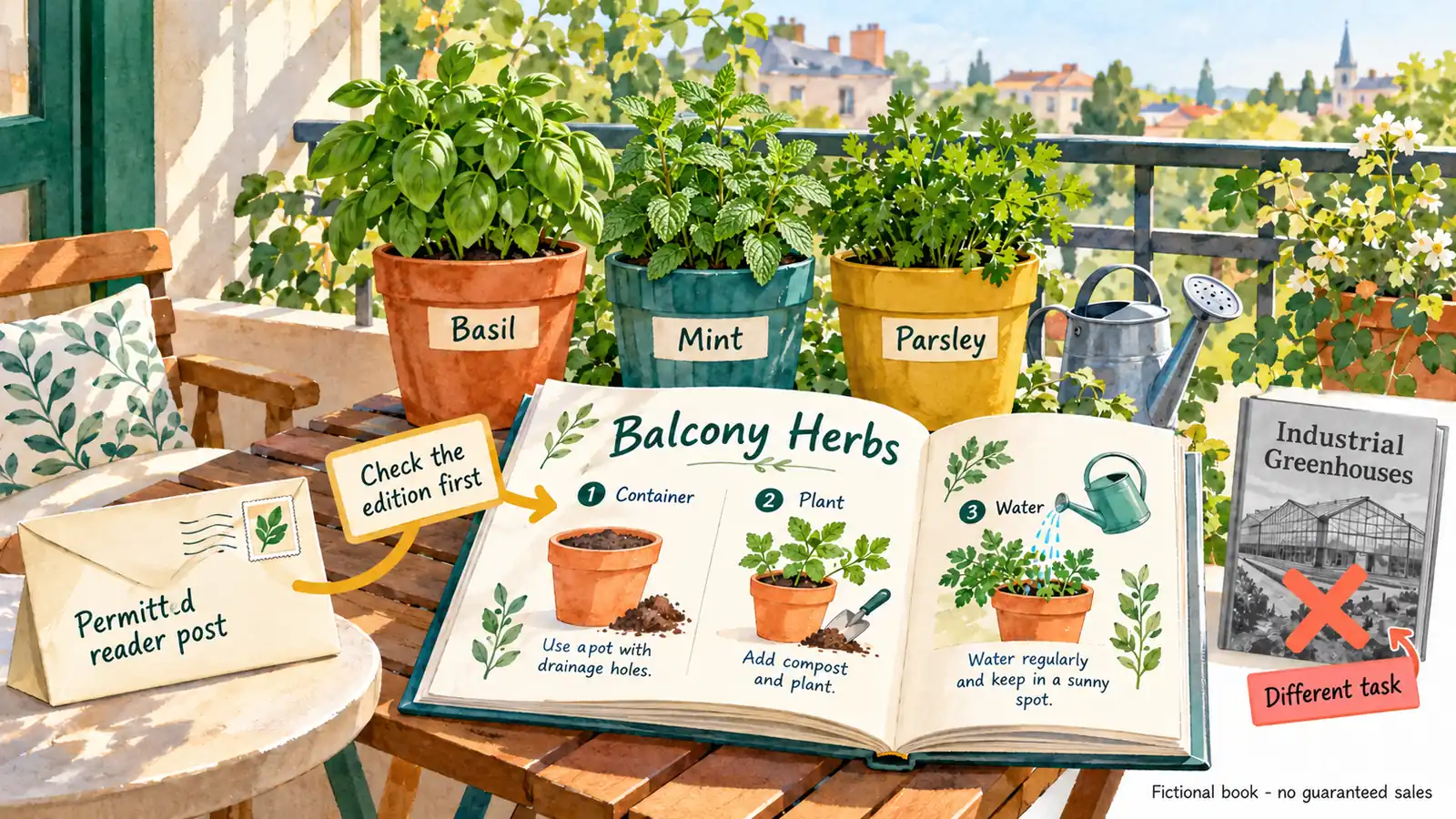
A beginner guide to growing basil, mint and parsley in containers on a sunny balcony, with illustrated planting and watering examples.
This fictional book is not an advanced greenhouse manual or a general encyclopedia of plants. Saying so helps you choose accurate language and appropriate reader communities. It does not guarantee demand. If the real interior cannot support the promise, fix the book or narrow the claim before changing metadata.
Check the exact edition and market before diagnosing visibility
Use the book's KDP Bookshelf link to open its detail page in the intended marketplace. Verify the ASIN, format, language and purchase availability. Then inspect it on a phone. A working paperback in one store does not establish that the eBook is live in another. Save the date of publication or the latest update so a processing delay is not mistaken for a permanent visibility problem.
KDP's find-your-book guidance describes department-specific search checks and the limits of a changing result set. New or republished books may take time to appear; consult the current timelines for the relevant operation instead of treating every field and format as instant.
Worked triage: available is not prominently discovered
In fictional record D-038, the intended paperback opens directly on Amazon.com, but it is not observed within the first 20 inspected ordinary results for a broad gardening query. Record direct edition: available; query result: not observed within 20; organic traffic: unknown. That evidence does not establish that the book is banned, absent from every result or unwanted by all readers. Check the query's reader task before paying for exposure or rewriting the book.
Search deliberately, not compulsively
Record the store, department, query, filters and device context. Distinguish an exact title or author lookup from a broad reader-intent query. They test different things. A reader looking for balcony herbs is not necessarily searching your title, and an author's personalized view is not an inventory of everyone's search results.
- Open the live edition directly before searching for it.
- Use the appropriate Books or Kindle Store department.
- Write the exact query and conditions beside the observation.
- Mark sponsored placements separately.
- Record "not observed in the inspected range" rather than "not indexed anywhere."
Use reader language without stuffing metadata
List a small set of phrases that genuinely describe the book: audience, setting, task, tone or constraint. Inspect the kinds of results and suggestions those phrases produce in the intended store. Suggestions can help you understand language; they do not provide a verified search-volume count or prove that a phrase will convert.
KDP permits up to seven keywords or short phrases and requires accurate, nonmisleading metadata. Do not borrow an unrelated author's name, unauthorized brands, promotional claims or Amazon program names as keyword shortcuts. Read KDP's keyword guidance before submitting changes. Advertising targets and KDP metadata are different fields with different purposes.
| Reader intention | Possible accurate language | Reject when |
|---|---|---|
| Grow herbs in limited space | Balcony herb gardening | The book only covers large outdoor plots |
| Understand basic container care | Beginner container planting | The content assumes advanced horticulture |
| Choose edible plants for pots | Growing kitchen herbs | The interior mainly discusses ornamental trees |
| Avoid a specific access problem | A genuine space, equipment or skill constraint | The claimed solution is not actually explained |
Do not turn the title into an advertising field
Use the actual title and an accurate subtitle, consistent with the cover. Keyword research should clarify the offer, not justify a title assembled from unrelated searches. Save the prior metadata and reason for the change. One legitimate repair is easier to evaluate than replacing every field whenever a search position fluctuates.
Choose categories by reader fit, not an easy badge
Inspect where comparable books with a similar audience and scope are placed. Ask whether a reader browsing that shelf would reasonably expect your book. Do not select an unrelated category simply because its visible list appears less competitive. A category label should describe the content, not a hoped-for marketing achievement.
KDP's category guidance explains selection and troubleshooting; available options can differ by format and marketplace. Recheck the live placement after processing and keep the exact category path in your notes. Selection is not a promise of top placement or a guaranteed amount of browsing traffic.
For the exact selection and verification steps, use how book categories work and the relevance-gated category workflow. A topic in this example is not a verified current selector path.
Separate placement from performance
Correcting the shelf is a useful operational outcome even before there are enough purchases to assess results. Do not claim a category change caused a sales increase when a newsletter and price promotion occurred at the same time. Preserve the event log and describe the competing explanations.
Help a suitable reader decide without inventing social proof
Check whether the cover, description and available sample communicate the same reading promise. Show the level and actual contents of a practical guide; establish tone and central conflict for fiction. Fix unreadable interior images, broken formatting or an incorrect format path before increasing exposure.
A book description is not a general-purpose sales landing page. Keep testimonials, review requests, external contact links, pricing and time-sensitive promotions out of the field under KDP's description rules. Use truthful content details rather than an unsupported claim that everyone will love the book.
Independent reading is not a ranking service
Invite appropriate early readers when useful, with no obligation to post or give a particular rating. KDP's merchandising guidance prohibits requiring or influencing a review in exchange for a free advance copy. Use the ARC reader guide for invitations; do not coordinate purchases or positive reviews as an algorithm tactic.
Choose one permitted introduction route
When the book and destination are coherent, choose a route that reaches the intended readers: an owned newsletter, a relevant community that permits promotion, a suitable third-party placement or a bounded advertising test. These routes have different costs and measurement limits. Being visible to everyone is not a useful substitute for reaching a plausible audience.
| Route | First useful action | Boundary |
|---|---|---|
| Owned audience | Send a relevant message to willing subscribers | Do not import buyers or commenters without permission |
| Reader community | Check rules and contribute a useful permitted post | No bulk messages or manufactured engagement |
| Promotion placement | Verify the actual product, fee, audience and dates | Selection and sales are not guaranteed |
| Amazon Ads | Define an eligible offer, question and loss allowance | Paid placement is not organic ranking |
Use the email guide, the promotion-site comparison or the Ads guide map for that route's operational details. Choose one first rather than spreading a small budget and limited time across every channel.
Measure the next step without inventing a funnel
Write down what you can actually observe: a live destination, a correctly scoped query check, a permitted post, measured visits on an owned page, subscriptions or reported orders. Each answers a different question. You cannot calculate an Amazon organic click-through rate from BSR and sales alone because the necessary impression and click counts are missing.
For example, 12 confirmed signups from 150 measured visits to your own sample page equal 8%. That fictional calculation concerns the owned page only; it does not reveal Amazon search exposure, Amazon purchase conversion or incremental book sales. Record the measurement system and its limitations with the number.
KDP Reports provides defined order and earnings views. Use those definitions rather than reconstructing exact sales from a public rank. Read BSR versus discoverability for a practical observation sheet and the ranking explanation before assigning meaning to a movement.
Use the click-measurement guide for compatible interaction counts, the reader-feedback guide for defects and expectations, and the sales-evidence guide for transactions and costs. Do not use one signal to fill another signal's missing denominator or attribution.
Run a small discovery cycle and keep the stop decision
First record the reader promise and fix availability defects. Next make one justified metadata or destination repair, saving the previous version. After the relevant processing period, inspect the actual live result. Then run one permitted introduction with a time or cash allowance and a clear next-step objective.
A ninety-minute work allowance, not a publishing deadline
For D-038, a fictional labor budget allocates 15 minutes to edition checks, 20 to supported reader language, 25 to the sample and destination, 20 to one community post that the group's rules permit, and 10 to a review note: 15 + 20 + 25 + 20 + 10 = 90 minutes. The post demonstrates the beginner balcony scope; it does not promise an advanced greenhouse manual or ask members to search, click, buy or review on command.
If access, publishing or the actual live correction remains unresolved, stop before the post and carry unused work forward. Platform processing and reader-response time sit outside that labor allowance. Zero ad spend does not mean zero cost: the author's work still has value. Record new purchases caused by the post: unknown unless suitable evidence supports a narrower claim. Use the recorded obstacle, not an arbitrary rank deadline, to choose the next cycle.
Review what changed, not what you hoped would change
Compare the same observation conditions and note other events. Keep an improvement supported by the evidence, revise an unclear offer or stop an unaffordable route. A before-and-after sales increase is not proof that one keyword caused it. A book that needs a different audience or clearer interior may not be repaired by another round of ranking checks.
Amazon does not guarantee top search placement; its search guidance makes that limitation explicit. The goal is a more accurate, reachable and understandable offer with a sustainable route to readers, not a promise to control the storefront.
Explore the KDP discoverability guides to connect this question with keywords, categories and ranking evidence.
Sources and scope
Official KDP sources checked: 17 October 2026. Examples are original fictional scenarios, not verified keyword demand or a live account audit. This guide offers a practical discovery workflow; it does not claim access to proprietary ranking weights or guarantee sales, indexing, reviews or search positions.
Frequently asked questions
What should I fix first when readers cannot find my book?
Open the intended edition directly from the Bookshelf and verify market, format and availability. Record publication or update timing before diagnosing broad search visibility. A working direct page and prominent query placement are different checks.
How do I choose language that helps discovery?
Start with the actual audience, subject, setting, tone or constraint. Inspect relevant results and suggestions as language clues, not verified demand counts. Keep keywords accurate and compliant rather than borrowing unrelated names or promotional claims.
Should I choose an easy category to get a badge?
Choose a category that honestly fits the content and expected reader. A weakly competitive but unrelated shelf is not a legitimate discovery strategy. Available category options and placement can differ by format and marketplace.
Do I need to promote on every channel?
No. Choose one permitted route that reaches plausible readers and fits your time or cash allowance. Owned email, communities, third-party placements and advertising have different deliverables and measurement limits.
Can I calculate organic conversion from BSR and orders?
No. Those observations do not supply the necessary organic impression and click counts. Keep availability, query observations, transactions and owned-page metrics separate, and label missing attribution as unknown.
Will accurate keywords guarantee the first page of Amazon search?
No. Accurate metadata helps describe the offer, but Amazon does not guarantee top search placement. Use a consistent observation protocol and a practical reader-introduction plan rather than promising control of the storefront.